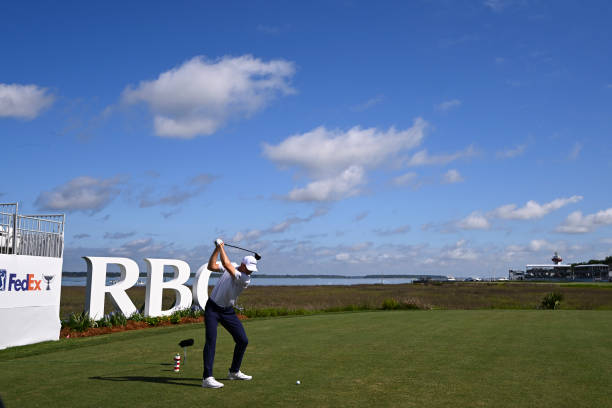
Harbour Town Golf Links has been hosting the RBC Heritage since 1969 and in that time it has established itself as the most precision-dependent venue on the PGA Tour. It rewards a specific skill set, punishes positional mistakes more than raw errors, and produces more reliable course history correlation than almost anywhere else on the schedule. Here is everything you need to know to build your model and find the best bets this week.
NOTE: These filters are optional ways to get deeper into the data. They will sometimes limit your sample size and force you to widen your time frame, but they are useful ways to determine who is excelling in the categories that matter most at Harbour Town. Any questions? Hit us up in the Discord.
The Basics — Start Here
SG: Approach
There is no more important number at Harbour Town Golf Links than approach play, and the historical data makes the case clearly. Over the past six years, Strokes Gained: Approach has been nearly three times more impactful than Strokes Gained: Off the Tee among top-5 finishers at the RBC Heritage. Every winner of the past six editions finished inside the top 10 in this category for the week. Every single one. The greens here average just 3,700 square feet, the second smallest on the entire PGA Tour, and the field hits greens in regulation only 58 percent of the time. That is one of the lowest GIR rates on the schedule. When players do find these Bermuda surfaces, they have genuinely earned it. Start here and weight it more heavily than anything else in your model.
View: Strokes Gained | Column: SG: APP | Possible Filters: Gain APP — Difficult, GIR — Difficult, Scoring Conditions — Difficult
SG: Tee-to-Green
Before getting into finer details, tee-to-green gives you a clean read on overall ball-striking health. The last nine winners have all ranked inside the top 11 in Strokes Gained: Tee-to-Green for their winning week. Jordan Spieth ranked first in this category when he won in 2022. Scottie Scheffler ranked first when he won in 2024. That is not a coincidence. Harbour Town is fundamentally a ball-striking contest where the putter is neutralized by Bermuda surfaces that run at roughly 12.5 on the Stimpmeter and punish distance control errors severely. Treat tee-to-green as your primary sanity check before layering in any other columns.
View: Strokes Gained | Column: SG: T2G | Possible Filters: Scoring Conditions — Difficult, Wind — Moderate or Windy
Driving Accuracy Over Driving Distance
This is where Harbour Town separates itself from most PGA Tour venues. The course annually produces the shortest average driving distance on the schedule, with the field averaging around 280 yards off the tee compared to the Tour average of over 300 yards. Only 25 percent of drives here exceed 300 yards. Raw length does not help you at Harbour Town because you cannot hold these small Bermuda greens with longer irons from the rough anyway. What matters is keeping the ball in the correct part of the fairway, and more specifically, in the correct part of that fairway to open up the right angle of attack into these tiny greens. Several holes are structured so that the right rough actually generates a better birdie opportunity than the left side of the fairway. Pull driving accuracy and directional tendencies here rather than raw distance numbers.
View: Off the Tee | Column: Driving Accuracy, Fairways Gained | Possible Filters: Fairway Accuracy — Difficult
Getting Granular — One Layer Deeper
SG: Around the Green on Bermuda
Around the green play at Harbour Town is the second most important skill set after approach play, and the specific surface matters enormously. These are TifEagle Bermuda greens, one of the tightest and most demanding putting surfaces on the schedule. Unlike Augusta where short grass scrambling from tight lies demands creativity, Harbour Town demands precise distance control on chips and pitches because the greens are contoured enough to feed shots away from the hole quickly. Scrambling percentage and Strokes Gained: Around the Green both show up consistently among top finishers here. Fitzpatrick and Spieth both gained over 3.5 strokes around the green in their respective winning years. Filter for Bermuda surfaces when pulling this data.
View: Around the Green | Column: SG: ARG, Scrambling % | Possible Filters: Green Type — Bermuda, Gain ARG — Difficult
Par 5 Birdie Rate
There are three par fives at Harbour Town measuring between 545 and 588 yards. They are all reachable in two for most of the field, but the field only goes for the green just over 50 percent of the time and succeeds less than 10 percent of the time when they do go for it. Eagles are rare, with Hole 2 producing an eagle rate of just 2.7 percent and Hole 5 at 1.9 percent. The par fives are scoring holes here, but they demand patience and precision rather than aggression. Par 5 birdie or better rate is a meaningful signal because players who birdie these holes consistently without the eagle risk of going for it are the ones who accumulate strokes safely over 72 holes.
View: Scoring | Column: Par 5 BoB %, SG: Par 5 | Possible Filters: Par 5 Scoring — Difficult, Scoring Conditions — Difficult
Bogey Avoidance
Harbour Town produces more blow-up holes than its length would suggest. The combination of water on every single hole, small greens with severe contours, and a coastal wind that can shift between rounds means positional mistakes compound quickly. Three of the past four editions have gone to a playoff, and seven of the past 15 have required extra holes, which tells you the margin separating contenders at the end of 72 holes is razor thin. A double bogey anywhere on the back nine can end a player’s week before Sunday afternoon. Prioritize bogey avoidance data from difficult scoring conditions specifically.
View: Scoring | Column: Bogey AVD % | Possible Filters: Scoring Conditions — Difficult, Wind — Moderate or Windy
Down the Rabbit Hole
These filters can take more time to configure and should be weighted lightly. Adjust your time frame and minimum rounds accordingly to protect against small sample noise.
Putting on Bermuda in Wind
Putting matters at Harbour Town, but it is a supporting factor rather than the headline. The Stimpmeter here runs around 12.5, which is fast enough to punish distance control errors on longer putts and create the occasional unreadable break on shorter ones. Windy conditions can continue to dry out the greens, making things faster and harder to read. Coastal wind complicates the read on exposed holes, particularly 17 and 18. Pull putting data filtered specifically to Bermuda surfaces and windy conditions rather than overall putting numbers, which will dilute the signal. Lag putting from outside 30 feet and conversion rate from 5 to 10 feet are both meaningfully predictive here given the contours. Justin Thomas gained over 5 strokes putting in his winning week last year. Si Woo Kim led the field in Strokes Gained: Putting through 54 holes before just missing out in a playoff. When the putter arrives at this course, it can be the deciding factor.
View: Strokes Gained | Column: SG: P | Possible Filters: Greens — Bermuda, Wind — Moderate or Windy
Pete Dye Course History and TPC Sawgrass Comp
Harbour Town is a Pete Dye design, and players with strong history on Dye-designed courses carry a meaningful edge here because the architecture shares a common DNA. The emphasis on precise angles off the tee, the premium on knowing where not to miss, and the scrambling demands from tight positions around the green all repeat across Dye’s portfolio. TPC Sawgrass is the most direct comp given the similar green sizes, water presence, and strategic layout. Pull Strokes Gained: Total specifically from TPC Sawgrass and weight it lightly as a supporting filter. It is particularly useful for identifying players making their first or second Harbour Town start who might otherwise have no course history to evaluate. Sudarshan Yellamaraju‘s T5 at the Players Championship this season is a relevant data point for exactly this reason.
View: Strokes Gained | Column: SG: TOT | Filters: None | Select TPC Sawgrass and Harbour Town Golf Links under Courses. Widen your time frame to at least three years.
The architecture of a Harbour Town model is more straightforward than most Tour stops because the course is unusually transparent about what it rewards. Start with approach play, layer in tee-to-green and driving accuracy, confirm with around-the-green data on Bermuda, and use bogey avoidance as your risk filter. Course history here stands up extremely well and should be weighted more heavily than at almost any other event on the schedule. When your model is complete you will have a card built on course-specific data rather than whoever happens to have run hot over the past two weeks.
For more model-building tools, course filters, and expert analysis on the 2026 RBC Heritage, visit betspertsgolf.com and use code BSG26 for 25 percent off any plan.