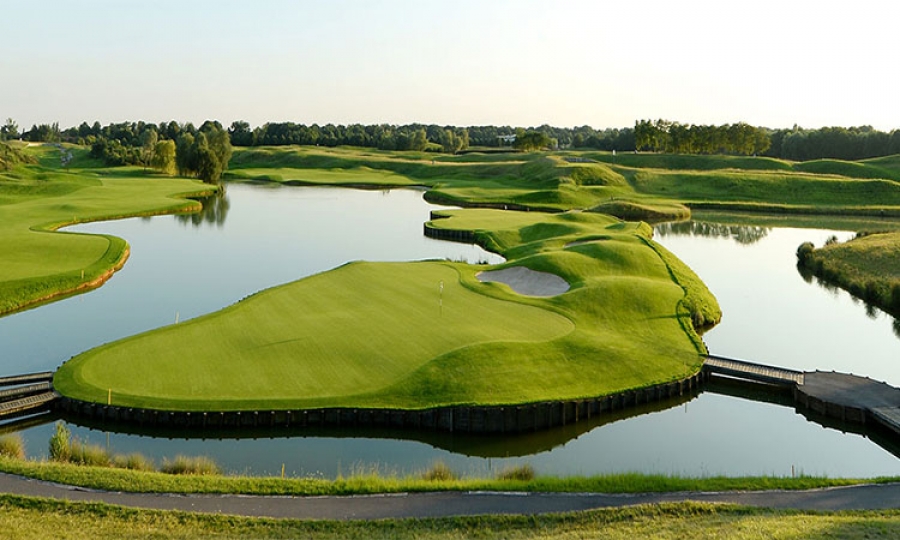
As the greatest athletes in the world unite for the 2024 Summer Olympics in Paris, the Albatros course at Le Golf National will be the tournament course for the men’s golf competition. This will be the third Olympic tournament for golf since the sport returned to the Olympics in 2016 when British pro, Justin Rose won in Rio de Janeiro, Brazil. In the 2020 games in Tokyo, American Xander Schauffele took gold.
Located just southwest of central Paris, Le Golf National annually hosts the Open de France on the DP World Tour which is the oldest national open in continental Europe. With it already hosting the Ryder Cup in 2018, it will become the first course to have hosted both the Ryder Cup and the Olympics.
As for the course, it’s a Florida-style design with a hint of Irish links and a lot of French flair sprinkled in. Boasting narrow fairways, gnarly rough, tricky green complexes, water on 10 holes, and one of the toughest closing stretches in the world, Le Golf National is a difficult test of golf. The Albatros Course has a hefty slope rating of 155, the highest a course can be given.
Nine combined players from both the American and European Ryder Cup teams in 2018 will be in action at Le Golf National this week. The setup will differ greatly from that event six years ago with three cuts of gradually increasing rough returning for this competition. 27 out of the 60 golfers in the field have also experienced Le Golf National playing in the French Open which is an annual event on the DP World Tour.
The Field
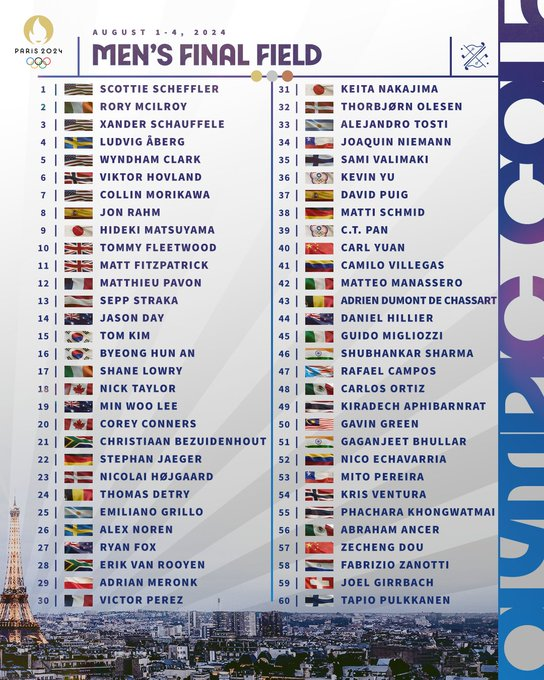
The International Golf Federation (IGF) uses the Official World Golf Rankings (OWGR) to create the Olympic Golf Rankings (OGR) as a method of determining eligibility. The top 15 world-ranked players are eligible for the Olympics, with a limit of four players from a given country. Following that, players are eligible based on the world rankings, with a maximum of up to two eligible players from each country that does not already have two or more players among the top 15. This happens until the number of 60 athletes is reached, including continental places.
With only 60 golfers in the tournament combined with the four-player cap per country, only 20 of the top 50 in the world rankings will be in Paris. The four American golfers include Scottie Scheffler (the number one player in the world), Xander Schauffele (the defending Gold medal winner), Wyndham Clark (a first-time Olympian), and Collin Morikawa (who lost in a playoff for the Bronze medal in the 2020 Olympics). Rory McIlroy, Ludvig Aberg, Viktor Hovland, and Jon Rahm are the other top-10 golfers in the world who are part of the field.
We have partnered with Underdog to bring you an easy way to claim a FREE, no-strings-attached 90 days of Premium Access to Betsperts Golf, plus up to $250 in bonuses when you deposit! Click here to learn more!
Finish Position and Strokes Gained Course History (2015-2023)
f684b2f3d4218ee06dad551b3bb2074b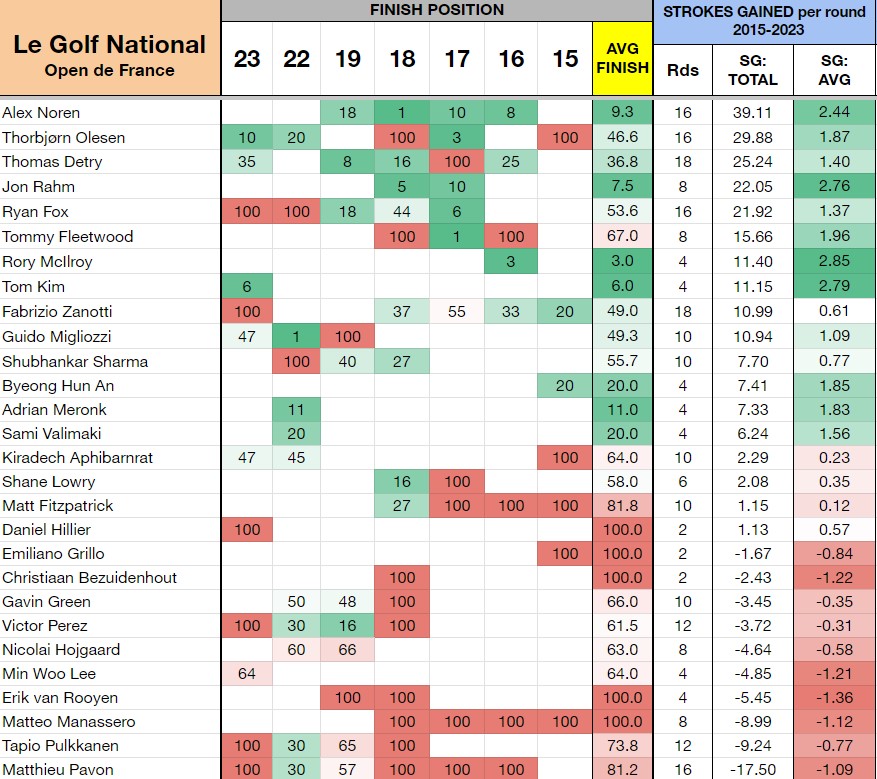
Course Features
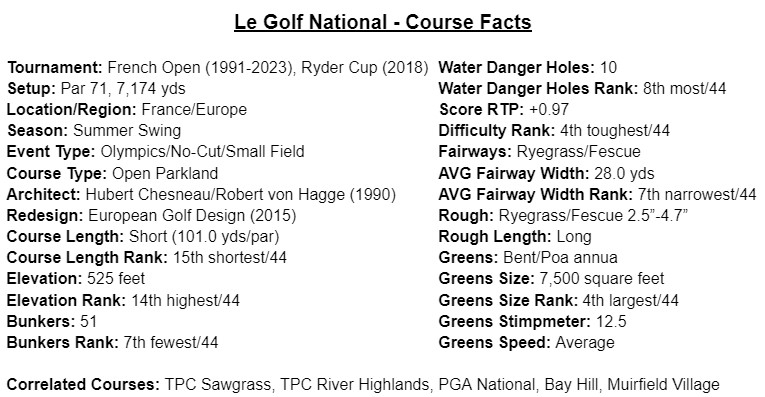
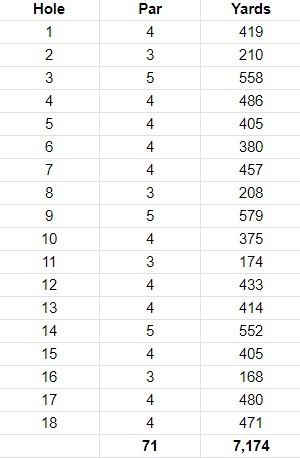
Designed by Hubert Chesnaeu and Robert Van Hagge, Le Golf National opened near Versailles on the outskirts of Paris in 1991. It’s owned and managed by the French Golf Federation and serves as a national training center in addition to hosting tournaments. The site features three different courses, but one, the Albatros, will host the Olympic tournament. It’s a shorter par 71 that will extend to 7,174 yards.
It’s a course with varying complexities as it combines the traditional style of a links track with the modern features of target golf and the plentiful water hazards of a Florida-style design. While there are significant mounds and humps and undulations across the layout, four decades ago the property was flat farmland. The building of the course required 300 trucks per day of materials from downtown Paris for three years to add elevation to the land. So many water hazards were created because the clay silt of the Parisian basin does not drain well. And it has such few trees because when it was built, it needed to be ready to host the French Open in 1991.
Le Golf National has regularly been one of the toughest courses in the DP World Tour rotation with the average winning score across the past ten French Opens playing around 11 under par. At last year’s French Open, only four players managed four under-par rounds. “The course itself is such a wonderful test,” said former European Ryder Cup captain Darren Clarke. “It’s fair. If you get too aggressive, there’s a lot of water in play.” Links-style pot bunkers line both the fairways and surround several greens.
Many believe that Le Golf National resembles TPC Sawgrass in numerous ways including its amphitheater stadium-style viewing areas, its shorter length, its emphasis on accuracy and strategy over distance off the tee, and its risk-reward drama on three of the final four holes, including two island greens at 15 and 18. As Phil Mickelson said about the course before Europe’s beatdown of the U.S. in 2018, “I think it’s phenomenal because it’s got the best viewing of any golf course I’ve seen, as well as the risk-reward. The last four holes are spectacular.”
Finding the fairway off the tee is paramount as the course has very narrow fairways combined with penal rough that is a blend of ryegrass and fescue. The rough was never in play for the 2018 Ryder Cup as Le Golf National superintendent Lucas Pierre explained that the first cut of rough (2.5 inches), the second cut (3.5 inches), and the third cut (4.7 inches) were eliminated at European captain Thomas Bjorn’s choosing. All three cuts have been re-implemented for this tournament. Though the width of the fairways hasn’t changed, the effective landing areas will be more forgiving with the first cut back in play. “For the Ryder Cup, the course was very narrow with the natural rough much closer to the fairway,” Pierre told Golf Digest. “It will be opened a bit more for the Olympics.”
Off the tee, golfers will be forced to strategize and gameplan. Bomb and gouge with driver is not a viable option. “It’s not go to the tee, hit driver as hard as you can,” said Jon Rahm. “It actually makes you think.” With water in play on so many holes, clubbing down is a smart choice on numerous holes. Poor decision-making and errant drives cost the Americans dearly in 2018.
When Alex Noren won the Open de France here in 2018, he hit 75% of his fairways and greens, and his average driving distance was 13 yards shorter than his season average thanks to a more conservative strategy. When Justin Thomas finished eighth here in 2018 in preparation for the Ryder Cup he only used driver seven times all week saying, “It’s just a hard golf course. It’s very narrow. You have to hit the fairways to have birdie chances. You can get it snowballing pretty quickly out here if you’re not careful.”
While many consider performance off the tee the most important test, with so many players likely hitting their drives to the same spots, many consider Le Golf National a second-shot course. “It’s not a driver golf course. It rewards good iron play,” said Graeme McDowell who won twice at Le Golf National in 2013 and 2014. The greens contain numerous quadrants that slope in all directions which allow for tricky pin placements (including near the water’s edge) and make proximity to the hole a difficult task.
Greens are quite large at an average of 7,535 square feet and are a mix of bentgrass and poa annua. They were set at a very slow 10.2 on the stimpmeter for the 2018 Ryder Cup but are expected to be much faster at anywhere between 12-13 for the Olympic event. Greens could be on the softer side as the Paris area has had one of the wettest years in recent memory with 23 inches of rain through the first six months of the year.
The nerve-wracking lake-strewn final four holes are nicknamed “The Gauntlet” and will test a golfer’s ball-striking prowess down the stretch when it matters the most. Statistically, the four holes average 1.2 strokes over par. The 15th is a shorter par 4 where players are almost forced to club down off the tee due to the protruding lake on the right. This means longer approach shots over the water to the island green. The short par-3 16th hole plays from an elevated tee, increasing the wind’s impact on tee shots, and is fronted by water.
No. 17 poses the greatest challenge. This par-4 is the second-longest on the course at 480 yards. The toughest shot on this hole is the drive. You won’t be able to go for anything if you’re in the rough which is why it is imperative to find the short grass. The green runs from back to front with very accentuated slopes. The 18th hole is a water-lined par-4 of 471 yards and tests players from tee to green. From the tee down the left side of the entire hole, there stretches a large body of water, but players must be careful because bailing out to the right doesn’t offer much safety either.
Most Important Stats For Success at Le Golf National
*In order of importance
- Distance From Edge of Fairway (DFEF)
- SG: Approach
- SG: Ball Striking (high water danger)
- Bogey/Double-Bogey Avoidance
- Good Drive %
- SG: OTT (Less Than Driver)
- Birdie or Better %
- Par 4 Scoring
- Scrambling
- 3-Putt AVD
Key Rabbit Hole Filters
- Scoring Conditions: Difficult/Very Difficult
- Event Type: No Cut
- Field Size: Small Field
- Water Danger: High
- Greens Surface: Bent/Poa
- Green Size: Large
- Rough Length: Long
- Gain OTT: Difficult
- OTT Club Type: Less Than Driver
- Missed Fairway Penalty: High
- Fairway Accuracy: Difficult
- Gain APP: Difficult
- 3-Putt AVD: Difficult
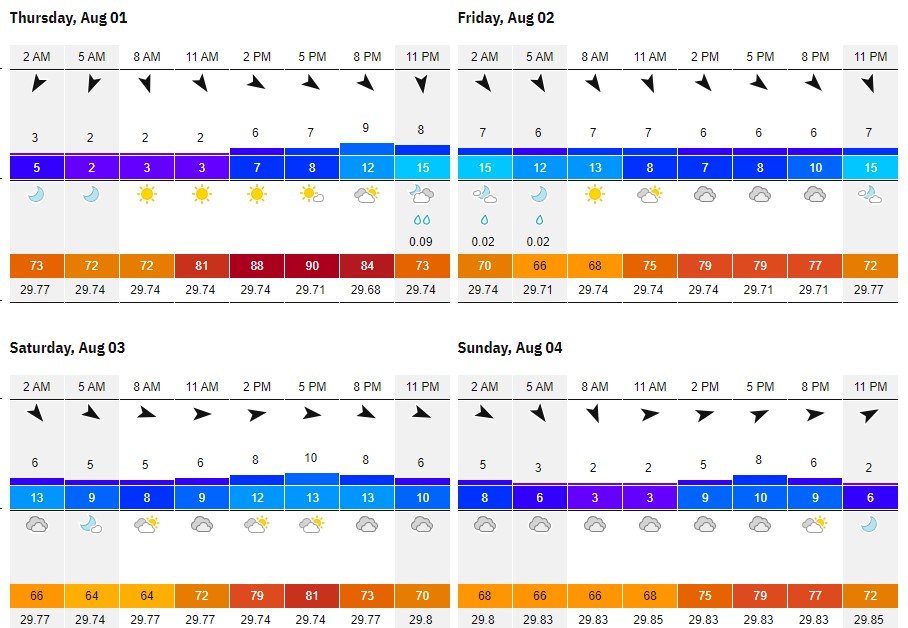
Weather Forecast – Paris, France