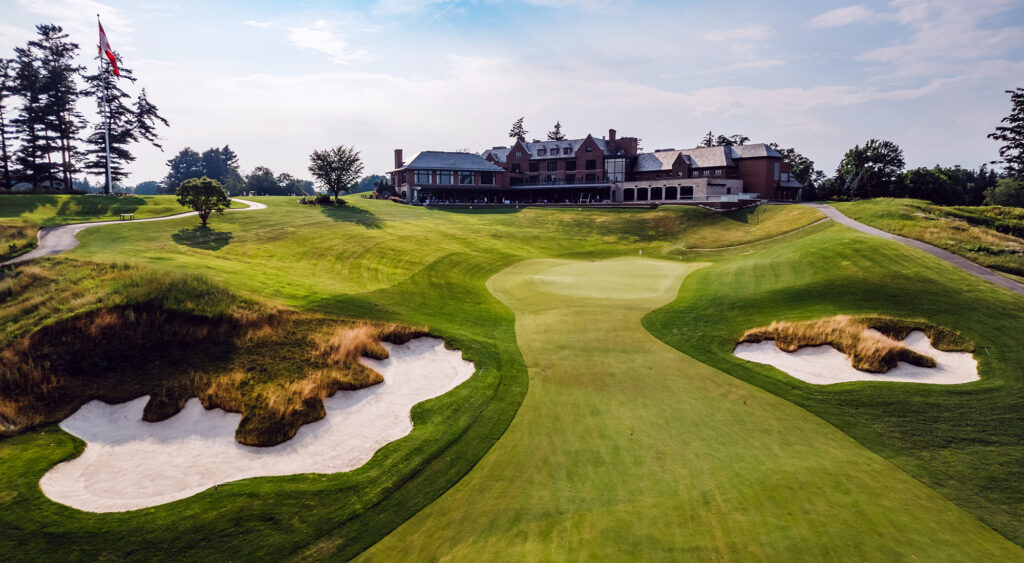
With only two weeks until the U.S. Open, the PGA Tour heads north of the border for the RBC Canadian Open at Hamilton Golf and Country Club in Ancaster, Ontario. Located 50 miles south of Toronto, Hamilton has long been regarded as one of the top courses in Canada. The Canadian Open is one of the longest-running events on Tour with this year marking the 112th edition.
Designed by famed architect Harry Colt, the club has hosted six Canadian Opens, the last being in 2019 when Rory McIlroy shot 22-under to win by seven strokes. This year’s RBC Canadian Open will try to replicate the spectacle of last year’s event at Oakdale when Nick Taylor holed a 72-foot eagle putt on the fourth playoff hole to defeat Tommy Fleetwood.
Soon after the 2019 tournament ended, the club engaged architect Martin Ebert to renovate all three sets of nine holes on the property: the West, the South, and the East. The goal was to return the course to Colt’s original design principles with modernized Colt-inspired bunkers, a complete rebuild of all greens including surrounding areas, new tee boxes, and an updated irrigation system. Hundreds of trees have also been removed, opening up the still narrow playing corridors, enhancing the course’s visuals, and providing better airflow and angles for the sun to improve the turf quality. Said Ebert, “Our objective was to add the finishing touches to a brilliant routing on challenging terrain to complete Colt’s original vision for Hamilton.”
The par 70 parkland design features outstanding routing and a variety of interesting holes with dramatic elevation changes that keep the layout challenging despite its lack of length. It rewards strategic placement off-the-tee along with short-game skills on these nuanced green complexes. From the third hole on the West course (front nine), which plunges into a valley punctuated by a meandering stream, to the drama of the closing hole (South course), Hamilton remains a memorable challenge.
The Field
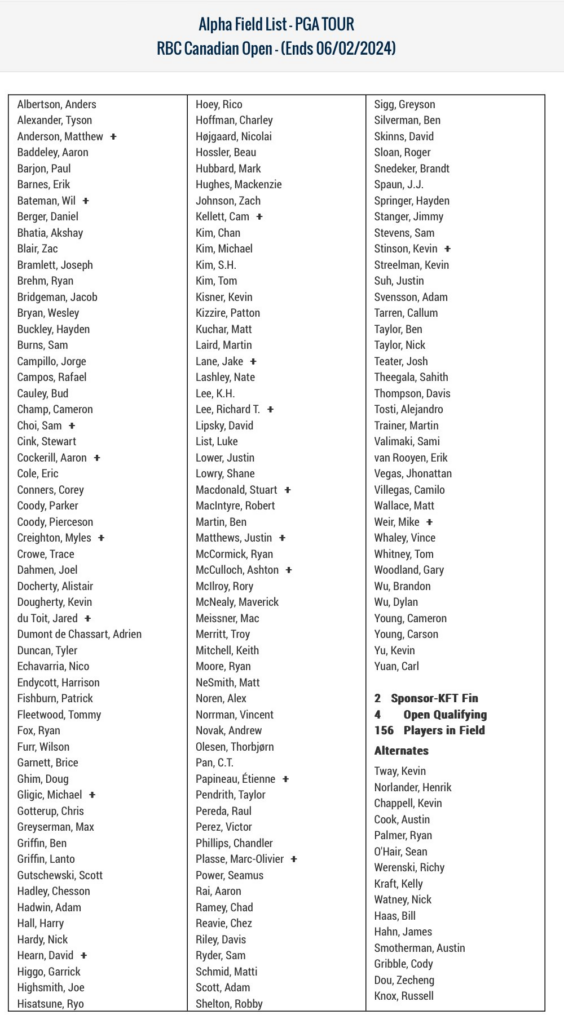
A full field of 156 golfers will partake in this year’s RBC Canadian Open. It is highlighted by world No. 3 Rory McIlroy who returns to Hamilton to defend his title here from 2019. He is among seven top-30 players in attendance which also includes Sahith Theegala, Tommy Fleetwood, Cameron Young, Tom Kim, Sam Burns, and last year’s winner and native Canadian, Nick Taylor. Other notables in the field include Shane Lowry, Akshay Bhatia, and Adam Scott. Along with Taylor, several top Canadian golfers are also playing including Corey Conners, Mackenzie Hughes, Taylor Pendrith, Adam Hadwin, and Adam Svensson.
Hamilton Golf and Country Club – History
Originally located in an area known for its heavily wooded seclusion called the “Grange Farm”, Hamilton Golf and Country Club was founded in 1894. Renowned English golf architect Harry Colt was chosen in 1914 to design the two main nine-hole loops for the Championship layout called “West” (front nine) and “South” (back nine). Both loops formally opened for play in 1916. Holt is also credited with redesigns at Muirfield, Royal Liverpool, and Royal Portrush, along with taking part in the creation of Pine Valley, which is considered one of the best courses in the United States.
Rees Jones completed a minor redesign of Hamilton in 1982, and the course was lengthened and renovated in the late 1990s in preparation for upcoming Canadian Opens. As is the case with most classical, “golden-age” courses, Hamilton continued to fall to the hand of “Father Time” and showed signs of aging. Following the 2019 Canadian Open, the club engaged architects Martin Ebert and Tom Mackenzie to completely renovate the property. Led by extensive tree removal and a return to the original design principles of Colt, their modifications have unlocked the beauty of the layout.
We have partnered with Underdog to bring you an easy way to claim a FREE, no-strings-attached 90 days of Premium Access to Betsperts Golf, plus up to $250 in bonuses when you deposit! Click here to learn more!
f684b2f3d4218ee06dad551b3bb2074bCourse Features
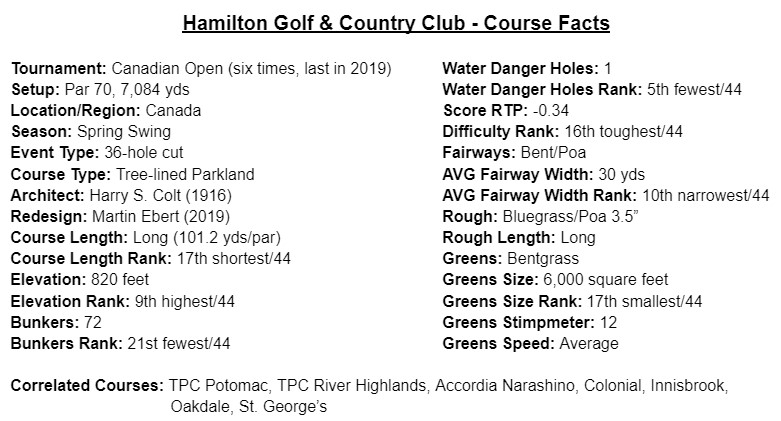
Hamilton Golf and Country Club is a par 70 course that measures 7,084 yards. With over 100 yards of length added during the renovation, it now ranks as the 17th shortest course on Tour. The routing is creative with both nines being out-to-in setups with the midway point of each as the farthest from the clubhouse. The course sits on excellent terrain with dramatic elevation changes throughout several sections of the property. Six different tee shots are elevated and play downhill with the approach often playing back up into the green. Others play uphill. Distance control and proper yardage numbers will be vital for caddies this week.
In 2019, it played to an average of -0.32 per round. Whether it’s more difficult or easy after the renovation lacks consensus. It’s a very playable course for members, yet can be very testing for inaccurate ball-strikers with its thick rough, and strategically placed penal bunkers. While both par 5s are reachable in two shots, there are only two of them from which to score. The par 3s are challenging and lengthy, which includes the 249-yard sixth hole. Three diminutive par 4s (346, 380, 386) blend in with nine others that rank among the shortest group of par 4s on Tour.
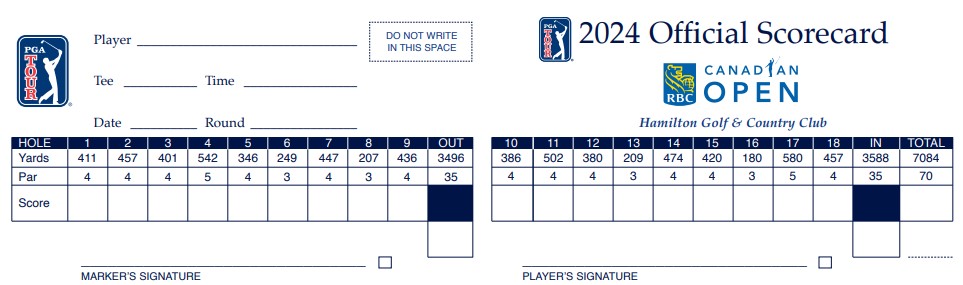
Hamilton has six dogleg holes and 30-yard wide fairways surrounded by penal 3.5″ rough to challenge players off the tee. Back in 2019, players like Rory McIlroy and Dustin Johnson blasted driver on a majority of holes and played a “bomb and gauge” style. The eventual winner, McIlroy hit driver 73% of the time while Johnson (finished 20th) led the field with 86% driver usage. While that is a strategy that will likely see a higher rate this week, make no mistake, at its core, Hamilton is a “less than driver” positional track that only averaged 283 yards off the tee combined with 55% fairway accuracy and 59% driver usage in 2019. Only three players in the top-10 gained strokes OTT with distance, while 14 of the top 16 gained strokes with accuracy. Even with the massive tree removal, these fairways remain tight and lined with a variety of mature trees.
In 2019, 42% of approaches were from inside 150 yards. With added length, we can expect a few more mid-to-long irons in this year’s edition. The GIR rate in 2019 was a healthy 63.6% and greens have been enlarged from an average of 5,000 square feet to 6,000 for this year. Fairways slope and canter in different directions leading even slightly inaccurate drives to bound into the rough. “Distance From Edge of the Fairway” will again be a key stat this week. When analyzing the leaderboard from five years ago, every single one of the top 17 finishers was positive for the week on both approach and putting. The top 10 included numerous elite ball-strikers who are shorter off the tee and who trend hot with the flat stick like Webb Simpson, Shane Lowry, Matt Kuchar, Sungjae Im, Adam Hadwin, Henrik Stenson, and Brandt Snedeker.
With the greens being larger and even easier to hit, there have been other changes during the renovation to also make them more difficult. “Some greens here were steep, others were bland and the level of detail wasn’t as good as it should have been. We tried to introduce a lot more attractive movement. Run-offs add a lot. It becomes such a one-dimensional exercise when you have thick bluegrass around a green site,” Ebert said. A majority of greens are open in front and allow for creative links-style “bump and run” type shots.
One of the biggest changes during the renovation was wrapping all the greens in short grass and pushing them up, so players who miss the surface will have a tight-lied chip to negotiate with. In fact, every single hole is surrounded by an apron of short grass. While the thicker rough will rarely come into play around the greens, leaving little room for variety, these collection areas will allow players to liberally use putter or low running shots from off the green.
The 72 bunkers on the course have been completely remodeled and are now proper Colt replications. Using an original set of his 1914 drawings as a guide, they include fescue eyebrows, more ragged edges, and additional depth. Ebert favorably compared his bunker renovation at Hamilton to work he did at Northern Ireland’s Royal Portrush, the site of the 2019 and upcoming 2025 Open Championship. Ancaster Creek meanders across the property but only presents real danger on one hole. It is the only water hazard on the course.
One of the characteristics Harry Colt was most known for in his course design was undulating green complexes. While the green sizes increased, Ebert sought to maintain the elevated “back-to-front” sloping surfaces that Colt would have been proud of. The greens themselves changed from a bentgrass/poa mix in 2019 to 100% V8 creeping bentgrass. They will have an average speed of around 11.5 on the stimpmeter and reach upwards of 12 by the weekend. The area has benefitted from a mild winter and early spring and should present as very lush. Fairways are bentgrass/poa while the 3.5″ rough is a blend of bluegrass, poa, and tall fescue.
Most Important Stats For Success at Hamilton Golf and Country Club
*In order of importance
- SG: APP
- Par 4 Scoring
- Good Drive %
- Distance From Edge of Fairway (DFEF)
- Proximity 75-150 yds
- Bogey Avoidance
- SG: Less Than Driver Courses
- SG: Putting (Bentgrass)
- Scrambling – Short Grass
- Proximity 200+ yds
Key Rabbit Hole Filters
- Course Region: Canada
- Course Length: Short
- Greens Surface: Bent
- Rough Length: Long
- Rough Surface: Bluegrass
- Rough Penalty: High
- OTT Club: Less Than Driver
- Fairway Accuracy: Difficult
- Par 3 Scoring: Difficult
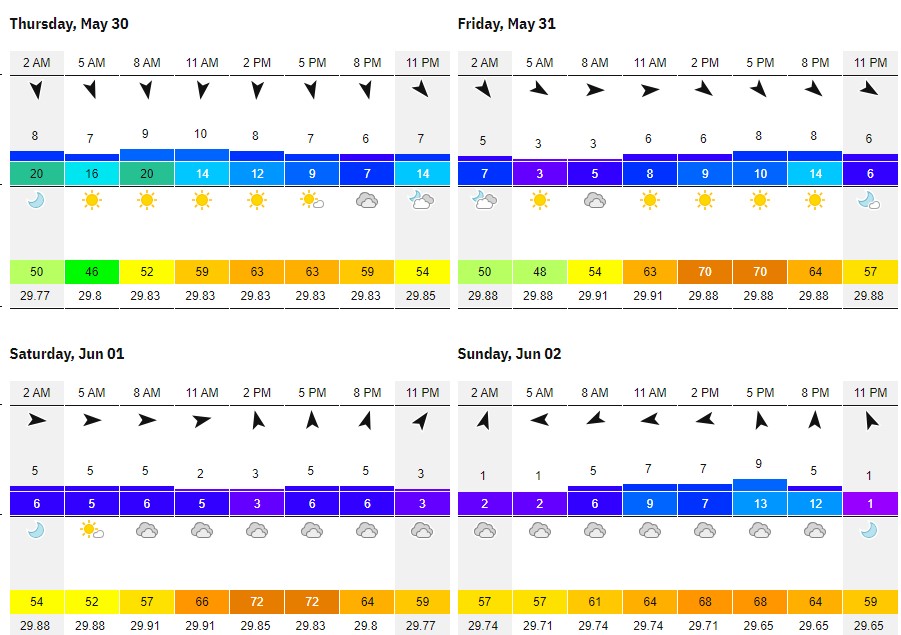
Weather Forecast – Hamilton, Ontario, Canada