After a scintillating PGA Championship in New York that saw Brooks Koepka win his fifth career major, the Tour heads back south to Texas for the Charles Schwab Challenge which is played at the legendary Colonial Country Club in Fort Worth.
Though the event’s name has changed numerous times, Colonial CC has hosted this tournament since 1946, making it the longest-running event on the PGA Tour held at the same location. From its beginning, the tournament has seen the most illustrious names in golf among its champions, including Ben Hogan, Jack Nicklaus, Arnold Palmer, Lee Trevino, and Tom Watson. Colonial is one of those rare gems that has stood the test of time, challenging the world’s best golfers year after year.
Colonial CC is a challenging tree-lined shot-makers course with tight fairways, numerous doglegs, and small greens. It is a positional course that places a premium on accuracy off the tee and on approach. Ball-strikers with past success on “less than driver” courses, who have the ability to be creative and shape their shots, and who can get hot with the putter on the bentgrass greens will have an advantage. Jordan Spieth, perhaps, summed up Colonial best by saying, “Fit it into tight windows, hit fairways, and control the ball on the green.”
With an average winning score of 14-under over the last dozen years, the list of recent past champions here is full of quality ball-strikers who can roll the rock including Daniel Berger, Kevin Na, Justin Rose, Jordan Spieth, Chris Kirk, and Zach Johnson. The last two winners, Sam Burns and Jason Kokrak took a more aggressive route off the tee by hitting driver at a 72% clip as compared to the field average of 58%. One thing both have in common with the previous group – both were among the best putters on Tour.
The Field
The week after a major notwithstanding, along with the fact that it is not an “elevated” event, there is a sneaky-strong field at this week’s edition of the Charles Schwab Challenge with nine of the top 20 golfers in the OWGR (Official World Golf Rankings) in attendance and 26 of the top 43 that are eligible in the top 50 of the rankings.
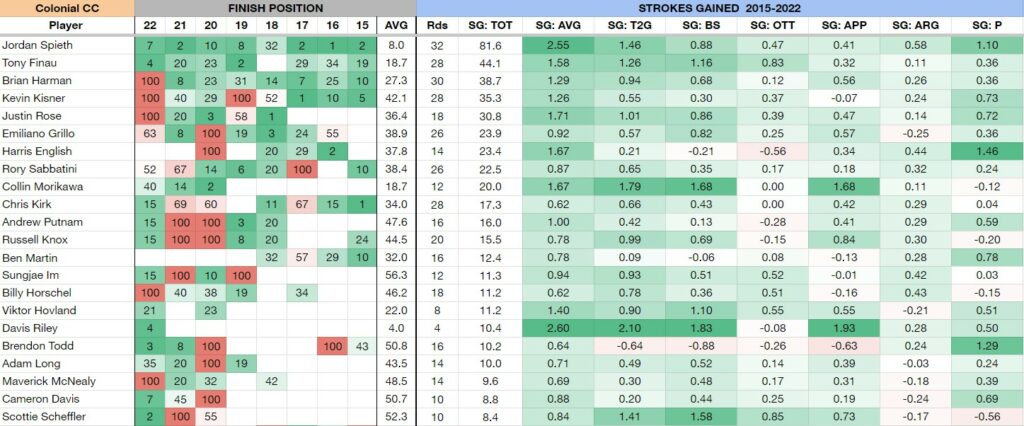
The field is headlined by world No. 1, and local Dallas resident, Scottie Scheffler who is coming off of a runner-up finish at the PGA Championship. Colonial’s most consistent contender, and another local, Jordan Spieth returns for the 11th consecutive year where he has ten top-14 finishes which includes a win in 2016. Viktor Hovland, Max Homa, Tony Finau, Collin Morikawa, Sungjae Im, and defending champion Sam Burns round out the list of elite players teeing it up this week. Other past champions in the field are Justin Rose, Kevin Kisner, Zach Johnson, Chris Kirk, and Rory Sabbatini.
With the Charles Schwab Challenge being an invitational event, there will only be 120 players in the field with the top-65 and ties making it through the cut-line. One of the storylines to follow is how golfers perform this week who were either in contention or who struggled mightily at last week’s PGA Championship.
Colonial Country Club – History
Located on the south bank of the Clear Fork of the Trinity River and just to the northwest of Texas Christian University sits Colonial Country Club. Founded in 1936 by Marvin Leonard, it was created out of his stubborn resolve to prove the naysayers wrong regarding the successful establishment of bentgrass greens in Texas.
Leonard convinced two visionaries in the golf architecture world, John Bredemus and Perry Maxwell to assist and help design the layout of the course. Bredemus drew up much of the original plan with Maxwell coming in after to improve the course by adjusting the routing of the holes. Maxwell specifically focused on toughening up holes 3-5 which today make up the “Horrible Horseshoe”.
When the course opened in 1936 it was quite similar to other layouts built during the same time period. Narrow tree-lined fairways and tiny greens were the norm. And yes, Leonard defied the odds as Colonial sported the first bentgrass greens in Texas.
Though unspectacular in many ways, throughout the years, Colonial has become the most iconic course in Texas. It hosted the U.S. Open in 1941 and became a mainstay as an annual Tour event starting in 1946. It was nicknamed “Hogan’s Alley” because of Ben Hogan winning five different times here on his home course.
The course was partially renovated in 2008 by Keith Foster. But many people believe that his work did not restore enough of the original Maxwell design. So as soon as the last putt drops in this year’s tournament, Gil Hanse and his team will do a complete restoration of the entire course in order to return it to its past glory. What is typically an 18-month project will be completed in 11 months just in time for the 2024 tournament.
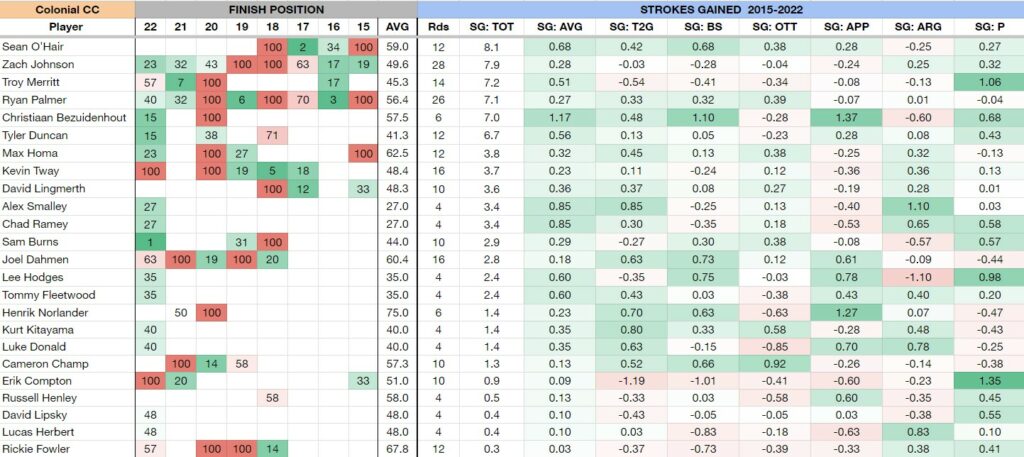
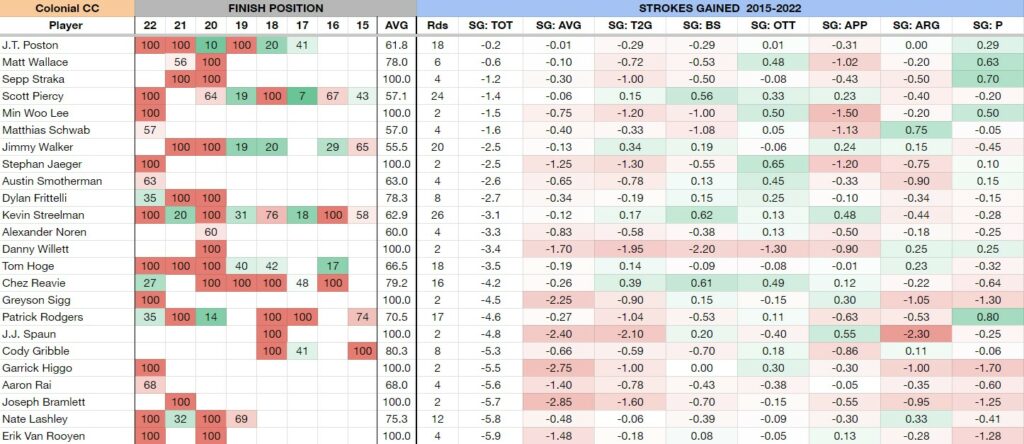
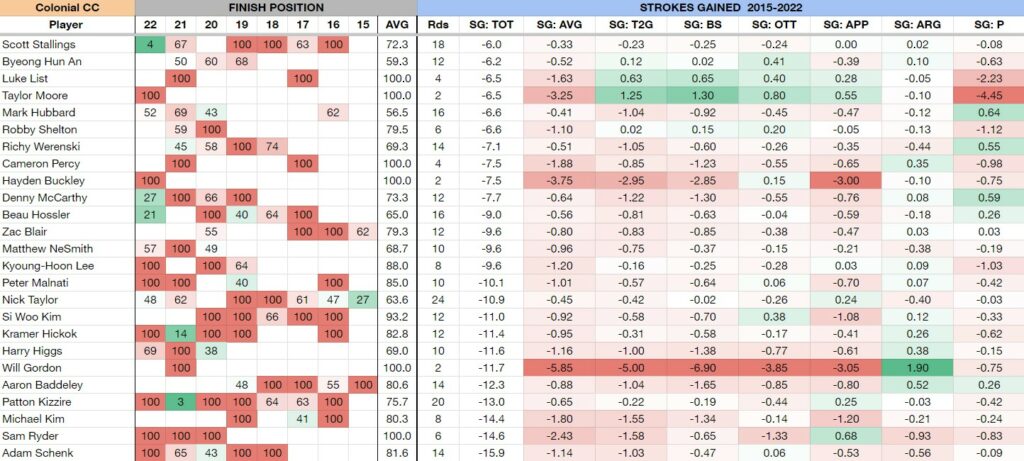
Finish Position and Strokes Gained Event History (2015-2022)
*Colonial Country Club is the 11th most predictive annual course on Tour
Course Features
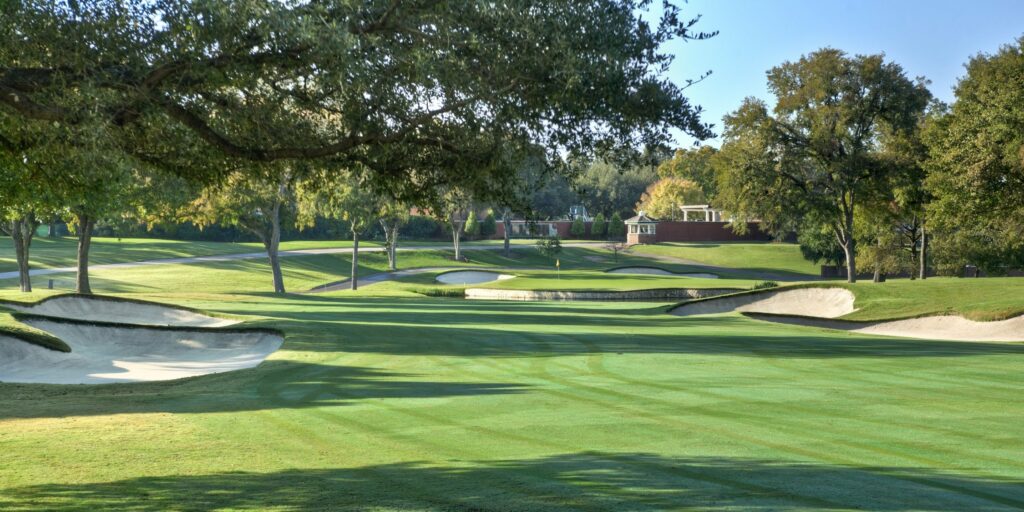
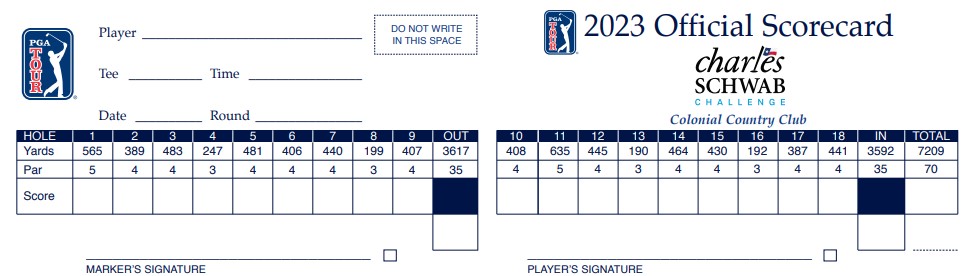
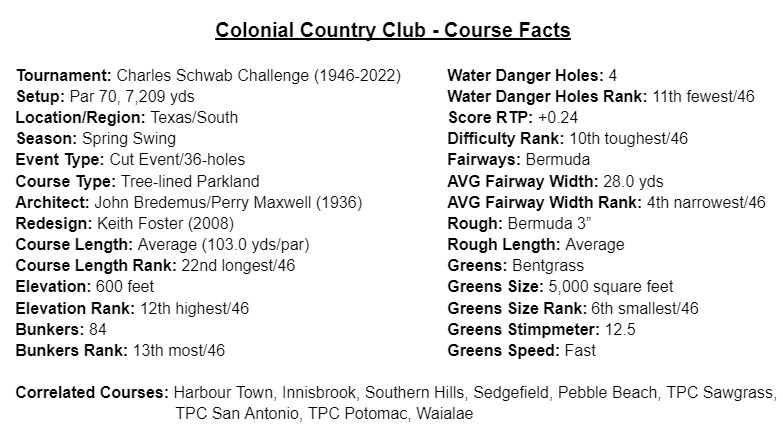
Colonial Country Club is a par 70 course that measures 7,209 yards. It is an average-length classical course that has tree-lined fairways, numerous doglegs, and small green complexes. Cut through pecan, walnut, and oak trees, the course features very little sloping and elevation changes. Similar to a Donald Ross design, the routing of the course is very creative as players will tee off in a different direction after each hole. When the Texas winds start to blow, this can cause some challenging decisions on tee shots.
Colonial has a mixture of Bermudagrass fairways and rough along with pure Bentgrass greens. The rough is average length at 3″, but because it is Bermuda it will present trouble for players who spray it off the tee. As far as speed, the greens typically run around 12 on the stimp meter to start the tournament and then are cut lower to a more speedy 13 by Sunday. As a perennial contender here, Justin Rose noted that the Bermuda rough is quite unpredictable. “It’s the type of rough here where you catch a lot of fliers, and the greens are small and tricky. So catching fliers into these greens you’ll make a lot of bogeys. I think the rough is tough enough around here if you catch a bad lie it’s hard to get it to the green.”
Colonial is one of the toughest courses to make birdies on Tour, and because it cannot be overpowered, continues to challenge golfers year after year. It has the third-smallest average landing zones on Tour when combining fairway width (28 yards) and green size (5,000 square feet).
Jhonattan Vegas summed up Colonial quite well by saying, “This course is all about precision. There is nothing about power around this place. You can drive to the wrong side of the fairway, and still not have a clear shot to some of these holes. It’s about thinking your way around this place. Obviously, all the past winners are guys that are able to do that really well.”
Over the last five years, it has averaged 0.24 strokes over par which makes it the 10th toughest course on Tour. Thanks to only two par-5s it has one of the lowest eagle rates on Tour along with the third-highest rate of pars. With the lack of many “birdie” holes, boring golf tends to win here. Also, because distance off the tee is a non-factor here, any type of skill set has the opportunity to win.
While the course is littered with 84 strategically placed bunkers, water presents a real danger on only four holes at Colonial. Along with the small greens and thick rough, high winds can also help to keep scores down. This was the case last year when Sam Burns won with a score of only 9-under as winds gusting 20-35 mph for three of the rounds made scoring even more difficult.
Hole Preview
Overall, the course provides a good mix of difficult holes and birdie opportunities. Being a par-70 track, the 12 par-4 holes rule the day at Colonial. Five of them are between the 350-410 yard range while four others are between 410-450 yards.
The four par-3 are each over 190 yards and rate among the toughest on Tour. They hold the lowest combined birdie rate at only 14% with the 247-yard 4th hole sitting at only 8% with a bogey-or-worse rate of 21%.
Most players will get off to a good start as the first hole is a 565-yard par-5 which is the easiest hole on the course. It is easy to reach in two shots and has a birdie or better rate at 47%. The second par-5 (hole 11) is far from easy as it’s a 635-yard beast that is difficult to reach in two and has a much smaller 29% birdie or better rate.
After starting with the two easiest holes of the course, things quickly toughen up as the most famous section of the course is holes 3-5, known as the “Horrible Horseshoe”. The three holes wrap around Colonial’s practice range to form a horseshoe shape. They are the three toughest holes at Colonial both mentally and scoring-wise. Since 2003, they are the second most difficult three-hole stretch on Tour and play a combined 0.49 shots over par.
Strokes Gained Analysis
Off the Tee
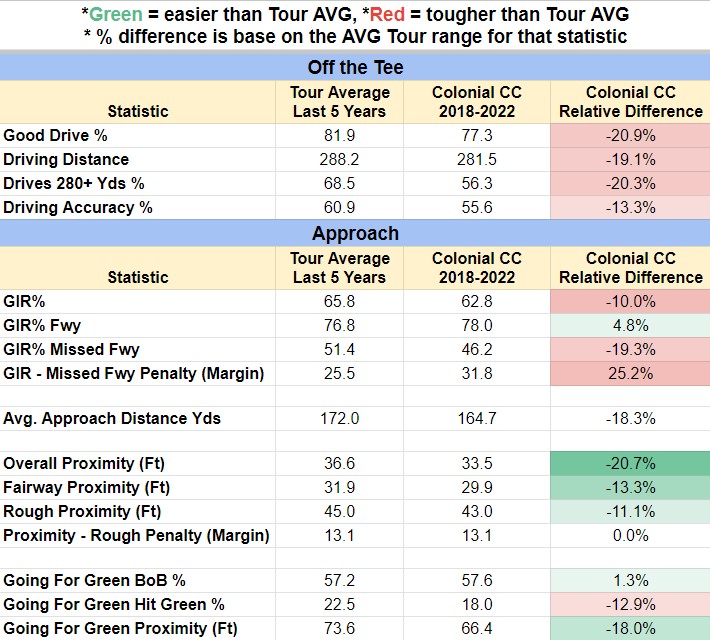
Ben Hogan once said that a “straight ball will get you in more trouble at Colonial than any course I know.” With so many holes twisting in different directions, players who can shape the ball both ways off the tee will be rewarded. With a majority of the doglegs turning right to left, golfers who draw the ball will have an edge this week. Said 2015 champion, Chris Kirk a couple of years ago, “It’s been a course that’s suited guys who hit the ball right to left over the years…and I definitely fit into that category.”
Overall, Colonial is the fifth toughest course on Tour to gain strokes off the tee. Furthermore, because it also has the 4th narrowest fairways at an average of only 28 yards wide, it cannot be overpowered.
Because of the heavy volume of trees lining the fairways, along with the unpredictable 3″ Bermuda rough, it becomes a positional-based course where most players will club down off the tee and take less than driver. Distance off the tee is seven yards lower here than the average course. Those who find the rough or try to cut across the doglegs and fail will have to deal with plenty of tree-blocked approach shots. Fairway-finders playing “target golf” rule the day here at Colonial. Speaking to being accurate off the tee, Adam Scott remarked, “You can’t be wild around this golf course. You have to really hit the fairway this week. There’s a premium on that.”
All that being said, it is important to note that some of the “bomber” types like Sam Burns and Jason Kokrak have demonstrated over the last couple of years that lines can be taken over the doglegs which allows for the longer hitters to hit over the top of the trees. While few winners over the last decade have ranked highly for the week off the tee, the 2021 winner, Kokrak, let the field OTT with 6.2 strokes gained.
Approach
With tight fairways and tiny greens, Colonial is definitely a course that will test a player’s ball-striking skills. With the 6th-smallest greens on Tour and the fifth most penal rough, there is a high emphasis on strong approach play with short to medium irons. A whopping 55% of approach shots are hit from the 100-175 yard range. 12 of the last 15 winners ranked inside the top 10 for GIR% and 11 of those 12 ranked inside the top seven.
The most important component to success at Colonial is simply hitting greens in regulation. Last year, it ranked as the ninth toughest course in which to gain strokes on approach. Players ranking high in Good Drive % combined with past approach performance on other small greens are ones that should rise up the leaderboard.
Around the Green and Putting
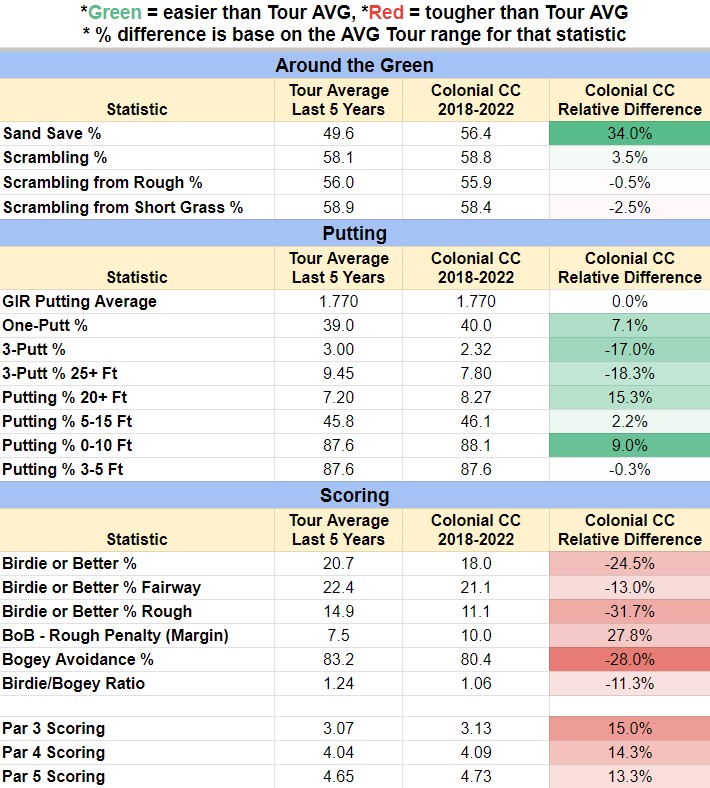
With a below-average GIR rate at 62.8% on these small greens, all players will get plenty of practice grinding out pars. Though sand saves and scrambling are easier here (ninth easiest to gain strokes on Tour), it is still a huge positive to be proficient around the greens. Many past winners have been among the best around the green players in the world. This includes players like Daniel Berger, Kevin Na, Jordan Spieth, and Kevin Kisner. It should be mentioned that the bunkers here definitely need a renovation as they rank as the most undemanding on Tour with a sand save rate of over 56%.
In addition to the winners usually ranking high for both GIR and Scrambling, many are excellent putters who typically get hot on the greens this week. As evidenced by the chart above, putting is easier by a good margin on these smooth Bentgrass greens. Other than Kisner in 2017, every winner in the last 19 years has ranked 17th or better for putting average. Though Maxwell was known for his severely undulated greens, the contours and sloping at Colonial are some of the blandest that he built.
Most Important Stats For Success at the Charles Schwab Challenge
*In order of importance
- SG: APP
- Fairways Gained
- Good Drive %
- SG: Par 4
- Proximity 100-175 yds
- Bogey Avoidance
- SG: Less Than Driver Courses
- SG: Putting (Bentgrass)
- Scrambling
- Birdie or Better %
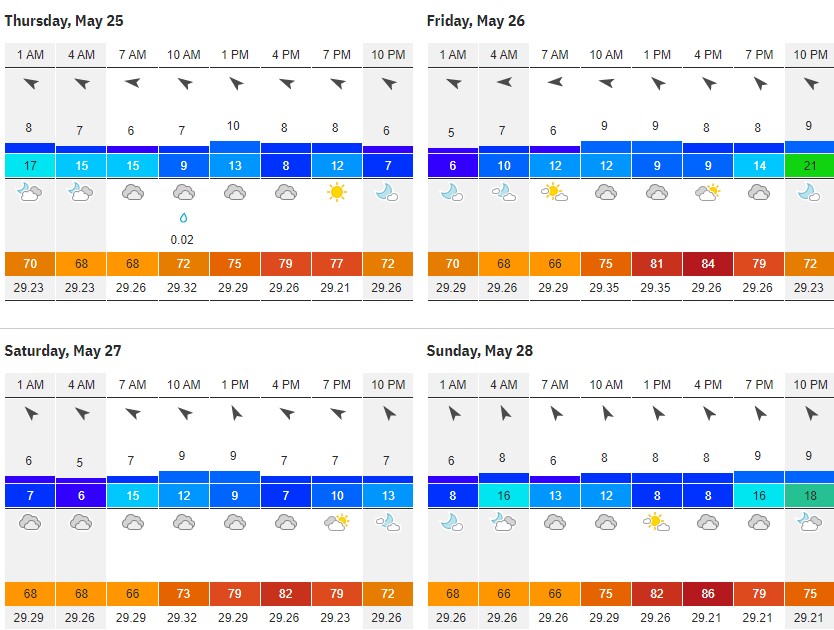
Weather Forecast – Fort Worth, Texas